
Certified Armor Plate, Cut to Your Dimensions
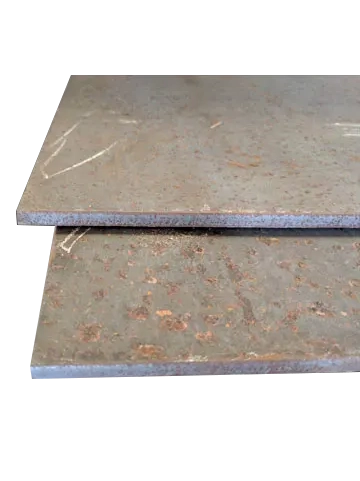
- We cut certified armor plate to your dimensions by waterjet.
- Automotive Armor Manufacturing is a fabricator, not a steel distributor. We purchase certified ballistic plate to the published military specifications and cut it down to your dimensions - then, if you need it, build it into a finished armor system in the same facility.
- That matters if you would otherwise source plate from one vendor and find a fabricator separately. We supply MIL-A-12560 (MIL-DTL-12560K), MIL-DTL-46100E and MIL-DTL-32332 cut to print, as a GSA contract holder (GS-07F-062DA).
| Cutting process | Abrasive waterjet - cold cutting, no heat-affected zone |
|---|---|
| Grades cut | MIL-A-12560 / MIL-DTL-12560K, MIL-DTL-46100E, MIL-DTL-32332 |
| Plate we supply | MIL-spec ballistic steel at 5/16" - AR500 at 1/4", rated to NIJ Level III (RF1) |
| Plate size as supplied | 48" x 96" (4' x 8') |
| Maximum thickness we can cut | We have successfully cut up to 3.25" |
| Waterjet table capacity | 6' x 12' (72" x 144") |
| Typical lead time | 2-3 weeks |
| Contract vehicle | GSA Schedule holder, contract GS-07F-062DA |
Request a quote on cut-to-size ballistic steel - send us your print, grade and quantity.
Why Waterjet Matters on Hardened Armor Plate
- Waterjet is cold cutting - no heat-affected zone.
- How ballistic steel is cut changes what you receive. Hardened armor plate gets its performance from a controlled heat treatment, and that heat treatment can be undone at the cut edge.
- Plasma and laser cutting are thermal processes. They melt through the plate, and in doing so they locally re-heat the steel either side of the kerf. That band - the heat-affected zone - is tempered and softened relative to the parent plate. On a high-hardness or ultra-high-hardness grade, where the whole point of the material is hardness, a softened edge is a real reduction in the property you specified and paid for.
- Abrasive waterjet is a cold process. It cuts by erosion rather than melting, so there is no heat-affected zone and no edge tempering. The plate you receive holds its certified hardness right up to the cut line, and the edge is ready for welding or assembly without having to machine damaged material away.
- This is why we cut every grade below by waterjet rather than plasma or laser.
MIL-A-12560 / MIL-DTL-12560K - Homogeneous Armor Plate
- MIL-A-12560 / MIL-DTL-12560K Ballistic Steel
- The long-standing U.S. military specification for homogeneous armor plate, widely referenced by its superseded MIL-A-12560 designation as well as the current MIL-DTL-12560K. It is the general-purpose structural armor grade: tough, weldable, and specified across combat vehicle hulls, vaults, doorways and hardened structures.
- Its defining characteristic is that hardness is thickness-dependent - the specification sets a different Brinell range for each thickness band, because hardness is traded against toughness as plate gets thicker. A single hardness number quoted for this grade without a thickness is meaningless.
| Specification thickness range | 0.098" - 6.000" |
|---|---|
| Supplied by A.A.M. at | 5/16", in 48" x 96" plate |
| Typical hardness | 302 - 400 BHN, varying by thickness |
| Hardness at 1/4" - 1/2" | 341 - 388 BHN |
| Class 1 | Heat treated for maximum puncture resistance. 0.098" - 6.000" |
| Class 2 | Heat treated for maximum resistance to impact. 0.098" - 2.000" |
| Class 3 | For evaluating armor-defeating ammunition only. 0.250" - 12.000" |
| Class 4a / 4b | Ultra-high toughness. Class 4a acceptance requires minimum through-hardness of HRc 47 (approx. 442 BHN) |
| Typical applications | Vehicle hulls and appliqué, security vaults, hardened doorways, structural armor |
MIL-DTL-46100E - High-Hardness Armor (HHA)
- MIL-DTL-46100E Ballistic Steel
- A quenched and tempered high-hardness plate for lightweight armor applications, intended where resistance to ball and armor-piercing ammunition is required along with multiple-hit capability. Commonly referred to as 500 BHN class armor.
- Compared with MIL-A-12560, it buys protection at lower weight - the reason it is specified for appliqué and vehicle work where mass is constrained, including vehicle armor kits.
| Specification thickness range | 0.098" (2.5 mm) - 2.000" (50.8 mm) |
|---|---|
| Supplied by A.A.M. at | 5/16", in 48" x 96" plate |
| Hardness | 477 - 534 BHN |
| Classes | Class 1 and Class 2 - both intended for welded structures and appliqué |
| Intended use | Lightweight armor requiring resistance to ball and armor-piercing ammunition with multiple-hit capability |
A note on threat ratings. MIL-DTL-46100E is qualified against the ballistic acceptance tests written into the specification itself - ball and armor-piercing ammunition, at defined velocities. It is not rated to the National Institute of Justice threat levels used for law-enforcement body armor and shields, and no steel grade defeats every threat at every thickness. What a given plate stops depends on its thickness, the threat, and how it is built into a system. If you are working to an NIJ level, see ballistic ratings or talk to us about the complete armor system rather than the plate alone.
MIL-DTL-32332 - Ultra-High-Hardness Armor (UHH)
- MIL-DTL-32332 Ballistic Steel
- The newest and hardest of the three, at roughly 600 BHN nominal. MIL-DTL-32332 exists to deliver equivalent or greater protection than lower-hardness armor in a thinner, lighter plate - which is why the specification tops out at 0.630". It is not produced in heavy sections, and that is by design rather than a limitation.
- It is specified for light tactical vehicles and weight-critical applications facing high-velocity and armor-piercing threats, where every pound of armor is a pound taken from payload or mobility.
| Specification thickness range | 0.098" (2.5 mm) - 0.630" (16 mm) |
|---|---|
| Supplied by A.A.M. at | 5/16", in 48" x 96" plate |
| Hardness | Ultra-high-hardness class, nominal 600 BHN |
| Condition | Quenched, or quenched and tempered |
| Intended use | Lightweight and weight-critical armor requiring resistance to ball and armor-piercing ammunition with multiple-hit capability |
AR500 vs. MIL-Spec Armor Plate
- AR500 Ballistic Steel - rated to NIJ Level III (RF1) at 1/4"
- AR500 comes up constantly in comparison against the military grades, and the distinction is worth being precise about, because it is not a difference of quality - it is a difference of what the number guarantees.
- AR500 is a commercial abrasion-resistant grade. The "500" refers to a nominal Brinell hardness of about 500, and the material was developed for wear life - chutes, liners, buckets, cutting edges. It is sold to a hardness target, not to a ballistic acceptance standard, and there is no requirement for any given plate to have been ballistically tested.
- MIL-A-12560, MIL-DTL-46100E and MIL-DTL-32332 are ballistic specifications. Plate supplied to them is produced, tested and certified against ballistic acceptance criteria written into the specification, with documentation to match.
- A.A.M.'s AR500 is rated to NIJ Level III (RF1) at 1/4". That is the practical distinction in one line: the AR500 grade carries no ballistic obligation, but the plate we supply has a protection rating attached to it at a stated thickness. It is a real option for rifle-threat protection where a military specification is not a contractual requirement. See ballistic ratings for what that level covers.
| AR500 | MIL-spec armor plate | |
|---|---|---|
| Written for | Abrasion and wear resistance | Ballistic protection |
| Hardness basis | Nominal ~500 BHN target | Specified range per grade and thickness |
| Ballistic acceptance testing | Not required by the grade | Required by the specification |
| Certification | Mill certificate to a commercial standard | Certified to the military specification |
| Typical use | Wear parts, targets, commercial applications | Vehicle and structural armor, government and defense procurement |
For a range target or a wear application, AR500 is often the sensible and more economical choice. If you are writing to a contract, an RFP or a government specification, the certification is the point - and AR500 cannot satisfy a MIL-spec line item regardless of how hard it measures. If you are unsure which your requirement calls for, send us the spec and we will tell you.
Frequently Asked Questions
Does A.A.M. sell full plate, or only cut pieces?
We are a fabricator rather than a mill stock distributor. We buy certified plate and cut it to your dimensions - send a print or a cut list and we will quote it.
What thickness of ballistic steel do you supply?
Our MIL-specification ballistic steel is supplied at 5/16", and our AR500 at 1/4", both in 48" x 96" plate. If your application calls for a different thickness, contact us with your requirement.
How thick a plate can you cut?
We have successfully cut steel up to 3.25" thick. Our waterjet layout table takes material up to 6' x 12', so we are not limited to the 48" x 96" size our own plate is supplied in.
Why do you cut with waterjet instead of plasma or laser?
Waterjet is a cold cutting process, so it produces no heat-affected zone. Plasma and laser locally re-heat and temper the steel at the cut edge, softening hardened armor plate exactly where it was cut. Waterjet leaves the certified hardness intact to the edge.
How long does a cut-to-size order take?
Typically 2-3 weeks, depending on grade availability and the complexity of the cut.
Is AR500 the same as MIL-spec armor plate?
No. AR500 is a commercial abrasion-resistant grade sold to a hardness target; the MIL specifications are ballistic standards with required acceptance testing and certification. AR500 cannot satisfy a MIL-spec requirement on a contract or RFP. That said, the AR500 we supply is rated to NIJ Level III (RF1) at 1/4", so it remains a practical choice for rifle-threat protection where a military specification is not contractually required.
What protection level does your AR500 offer?
Our AR500 is supplied at 1/4" and rated to NIJ Level III (RF1). See ballistic ratings for what that level covers, or contact us with your threat requirement.
Is A.A.M. a GSA contract holder?
Yes - GSA Schedule contract GS-07F-062DA.
Request a Quote
Send us the grade, thickness, dimensions and quantity - or just the print - and we will come back with pricing and a lead time. If you are not certain which specification your application calls for, tell us the threat and the platform and we will help you work it out.